
GREENLAND: Geopolitics, Defense – and Profit? By Joe Shaefer
*Invited Commentary for the National Security Forum of Nevada*
“Oh, Greenland is a barren place,
It’s a place that bears no green.
Where there’s ice and snow,
and the whale-fish blows,
And the daylight’s seldom seen, brave boys,
And the daylight’s seldom seen.”
— The last stanza of Greenland Whale Fisheries
The Geopolitics
Many commentators who have never been to Greenland presume knowledge based on inaccurate
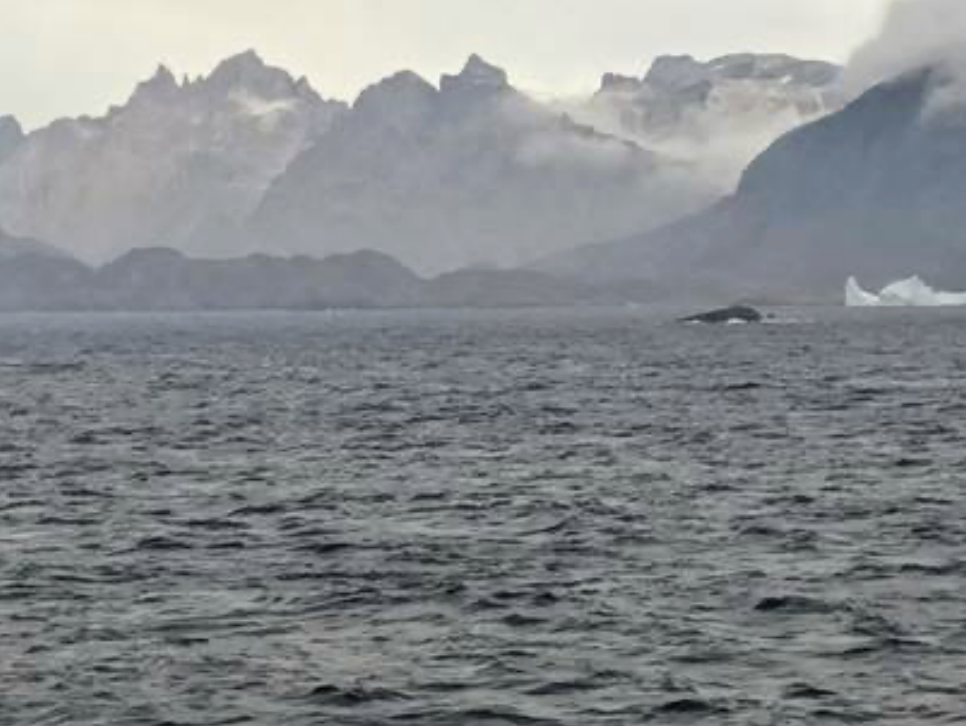
information. I have been there three times in the past 3 ½ years, spoken to locals, and seen cruise
ships a-plenty, never a single Russian or Chinese vessel, including on any marine vessel website….
First, a little history
Today, Greenland is “an autonomous territory” within the democracy of the Kingdom of Denmark.
This autonomy was granted to Greenland’s people by Denmark’s “Home Rule Act” 47 years ago,
which conferred control over its internal affairs, while Denmark retained responsibility for defense
and foreign affairs. In addition, the Self-Government Act of 2009 strengthened Greenlandic
powers and granted legislative authority to Greenland.
How did Denmark establish this relationship with Greenland? For that, we must go back slightly
more than 1000 years. The name Greenland was coined by the Norwegian Erik Thorvaldsson,
known as Erik the Red, who was exiled from Iceland around 982. There had been a Hatfield-McCoy relationship between Erik’s family and another family. Blood will see blood.
There were murders on both sides, but it seems the other side had the ear of the local powers. Erik
was exiled for three years to allow things to cool down. Erik set out with his extended family to
find some place where the reception would be warmer.
Erik the Red may or may not have been the first Norseman to see Greenland (some accounts credit
earlier visits of 50 and even 100 years), but it was he who put it on the map (and his son, Leif
Ericson, who, around 1002, put the continent of North America on the map)!
Erik named the place upon which he alighted Grœnland in hopes of attracting other settlers to join
him. (A technique that has been used by numerous real estate developers ever since, naming their
tumbleweed-strewn desert plots Shady Acres, Mountain Shadows, Montreux Estates, and so on).
It’s important to note that around the same time, what we call the “Thule peoples” began migrating
from Alaska into Canada and Greenland, bringing innovations such as whaling harpoons and the
use of dog sleds. Among these were individuals who identify as Inuit.
The Norsemen who came with Eric the Red, as well as those who followed him, both taught and
learned much from these native peoples, and, in the tradition of humans everywhere, they also
fought with and killed one another from time to time.
Greenland is not, and was not then, merely “a piece of ice,” as President Trump dubbed it. From
the earliest oral records, we know that these were not people huddling in caves, seeking haven
from the ravages of continual winter.
Ice core samples and clamshell-dated artifacts both clearly show that during this time frame, from
roughly 900 to at least the 1300s, in one of the many global warming cycles, herbaceous trees and
plants grew in Greenland, wine vines were planted, livestock were introduced, and plants such as
barley — essential for beer, whiskey, and other similar necessities of life – were grown.
After this Medieval Warm Period, however, the Little Ice Age followed. While Norwegians still
claimed what is today Greenland, their plants and imported livestock died off, and they could no
longer make beer, so they began to return to warmer shores. By the early 1400s, they had left their
mark but then headed home.
Good timing. The Kalmar Union was formed in 1397. This was a union of Denmark, Sweden (then
including Finland), and Norway (including Iceland, Greenland, and the Faroe Islands), a
monarchy under Queen Margrethe I. Sweden broke from the union in 1523, but Norway and
Denmark remained united until 1814. When the two nations parted, Denmark retained the Faroe
Islands and Greenland.
Enshrined in the laws of the time and reaffirmed many times since, including by the UN, this is
why Denmark has the promise and the responsibility to protect and defend Greenland.
Greenland’s current geopolitical status is home rule, a semi-autonomous nation with its own
legislature and Prime Minister. Greenlanders elect two representatives to Denmark’s Parliament,
and Greenlanders manage almost all domestic affairs, while defense and foreign policy are handled
by Denmark.
The Defense Factor
Why is President Trump so intent on annexing Greenland? The United States already has the
willing cooperation by Denmark to establish bases and deploy military personnel. The US does so
through joint exercises with fellow NATO members.
Speaking as someone who has studied the history of U.S. involvement in Greenland, I find no
justification for U.S. annexation.
The United States established bases in Greenland as early as April 1941 under an agreement with
Denmark. The United States maintained numerous bases in Greenland during World War II and at
least six unclassified or declassified bases during the Cold War. There may be others still
classified.
Denmark has never denied these US requests, so why would the U.S. believe it must “own the real
estate”?
Over time, with increasingly powerful over-the-horizon intelligence, surveillance and
reconnaissance technologies, the US closed most of the bases in Greenland. They were deemed
less necessary and more logistically challenging than those in Canada, Iceland, the UK, Norway,
and other NATO facilities.
How does owning the land as the 51st state or as a territory such as Guam alter this dynamic?
Only the old Thule Air Base (now known as Pituffik Space Base) remains active today because it
meets U.S./NATO requirements to perform everything physical annexation is alleged to do:
support the GIUK Gap, provide advanced early-warning capabilities for missile deployment,
conduct space surveillance, and track satellites.
If you are unfamiliar with the GIUK Gap, it is a geographic position in the North Atlantic that
serves as a layered detection and tracking system used by NATO to identify Russian submarines,
ships, and aircraft as they attempt to evade NATO tracking when they leave the Norwegian Sea to
enter the larger North Atlantic Ocean.
GIUK stands for: Greenland Iceland United Kingdom
The entire maritime area is covered by aircraft, ship, and space surveillance; submarine patrols;
sonobuoys; seabed sensors; and other listening devices operated by the US, Canada, and other
NATO members. Air missions are flown from Greenland only occasionally. Most are flown from
NATO member nations Iceland, the UK, and Norway.
Because the ocean floor rises along this gap, it’s one of the few places in the world where
submarines that can dive very deep must still pass along predictable acoustic corridors.

If Greenland sounds amenable to U.S. basing and already provides what the U.S. needs for
homeland defense, it is. The reason the US doesn’t deploy much training in Greenland is simple:
the USA already has a place much like Greenland to practice Arctic warfare under the most brutal
conditions; we call it “Alaska.”
The map below was created by a Norwegian firm. It shows a trailing multi-year isotherm (the red
line representing areas of equal temperature over a given period). Everything inside the red line is
typically below 50 degrees in midsummer; everything outside the red line is a higher temperature.
The dotted line is the Arctic Circle, and the line outside of it is the 60th latitude north. Sunny-inthe-summer Norway and Sweden lie mostly north of that same latitude (with major cities Oslo,
Stockholm, Helsinki, and St. Petersburg, Russia, lying almost exactly along the parallel). Norway,
in particular, remains warmer because the Gulf Stream enters the Norwegian Sea and warms the
western coast.
But Anchorage and Fairbanks, Alaska, are even further north, with Fairbanks even farther north
than Greenland’s capital, Nuuk!

From the perspective of winter combat training and deployment rotations, the US does not require
a presence in Greenland. It has Alaska. I have visited the Arctic Survival School, operated by the
U.S. Air Force at Eielson Air Force Base (often called “Cool School” in Alaska, which teaches
military personnel survival skills tailored to extreme Arctic conditions.
If the US doesn’t need Greenland for training and can open bases alongside Danish and NATO
forces just by asking, what is the rationale for “owning Greenland”?
Some have answered that question by saying, “It is essential for the Golden Dome.” First, the
Golden Dome is not a magic curtain that the US can erect. It is not a physical barrier; it is a missile
defense system first and foremost, using weapons to detect and intercept enemy missiles.
It employs a constellation of expensive satellites equipped with sensors and space-based
interceptors. It requires the intellectual and physical capabilities of naval, air, and space forces
across the spectrum of US military branches. The Congressional Budget Office estimates it will cost about $175 billion over the next three years alone, and the American Enterprise Institute
projects a total cost of about $3.6 trillion.
This does not include any estimate for extending the Golden Dome over Greenland, which would
require substantially more ships, aircraft, and satellites.
A final thought on the immediate defense of the USA, pre-Golden Dome. The reality of defending
the US homeland by forward stationing assets in Greenland:
Denmark spends roughly 600–800 million USD per year subsidizing Greenland. Denmark pays for
Greenland’s judiciary, police, and defense. Denmark also adds special projects funding for health
care and infrastructure upgrades. Medical care is expensive in remote settlements where medevac
flights are necessary.
Fortunately, Denmark maintains personnel from the Danish Armed Forces Arctic Command and
Search and Rescue units on the island.
The rest of the economy is currently dependent on fishing, which accounts for 90% of Greenland’s
exports.
Will American voters, who already feel the pinch of inflation and already believe the US
government wastes too much money, think there might be better ways to spend that kind of money
for “a piece of ice”?
Having NATO allies who have fought alongside the U.S., even in its forever wars, certainly
appears much smarter than dismissing them as insignificant. Many of them are already expert
Arctic warriors.
Are There Riches Waiting to be Had in Greenland?
Yes, and a more nuanced “NO.”
Consider where the massive discoveries of natural resources have occurred in recent years: oil and
gas on the North Slope of Alaska, in northern Canada, in the North Sea between Norway and
Scotland, and in the Russian north.
Coal, iron, nickel, tungsten, gold, silver, and rare earth elements (first discovered near the town of
Ytterby, Sweden, northeast of Stockholm, just below—you guessed it—latitude 60) are but a few
of the treasures the north has offered.
Can it be any different in Greenland?
Not according to the government of Greenland, which has provided the map below:

This looks like the California and Klondike gold rushes rolled into one, doesn’t it?
And it might just share the same fate as those who went to both locations to make their fortune. A
few became wealthy, and most received a pair of well-worn Levi’s.
Take a close look at the crossed pickaxes (the “X’s”) on the map. The ones with the picks on top
are active sites. This doesn’t mean anyone has struck it rich, or even found any base metals, critical
minerals, or REEs. Now notice the ones where the picks are laid down. These are the ones that are
abandoned.
There are two active sites and five abandoned sites! There are good reasons. Before visions of
sugar plums and endless wealth permeate the minds of investors or politicians…
There is virtually no modern mining infrastructure in Greenland.
It isn’t easy or cheap to transport equipment and seasonal workers back and forth to Greenland.
It isn’t easy to maintain equipment and workers in Greenland.
In most Greenlandic locations, companies can operate for at most four or five months before
winter makes it impossible or too costly to penetrate the ice.
Local opposition is a real possibility. Greenlanders enjoy one of the world’s wonderful wild places
and value their country and their lifestyle. Denmark has traditionally protected the Inuit culture
from outside influences. (Most Greenlanders are Inuit or of mixed Danish and Inuit ancestry.)
Greenland’s parliament has passed legislation restricting uranium byproducts.
Many REEs are co-located with or near uranium deposits.
Greenland’s ecosystems are fragile.
As in many places worldwide, permitting can take forever.
There are few roads, even dirt roads, between towns, and even fewer to the most coveted deposits.
There are only fishing boat-sized ports. Cruise ships anchor offshore and tender into port.
It is easier to transport heavy equipment by sea, but without ports, that is not feasible.
Airlift? Terribly expensive.
Every senior military officer comes to understand and embrace the importance of the words
spoken by Commandant of the Marine Corps General William H. Rupertus, during World War II:
“Amateurs talk strategy; professionals talk logistics.” If you can’t get the beans and bullets to
those at the front, numerical size becomes moot.
The logistics of transporting mining equipment to Greenland, deploying seasonal workers there,
maintaining the equipment, obtaining permits to excavate the land to reach the minerals, and
transporting the minerals across the seas could be prohibitively expensive.
The unit of measurement for REEs is Metric Tons. When you see that Greenland has a proven 1.5
million metric tons of REE reserves, that sounds like a huge bonanza. (“Proven reserves” are the
total estimated amount of Rare Earth Oxides that are economically viable to extract.)
However, the most recent USGS and industry data for 2026 show that:
- Brazil has 21 million proven reserves.
- India has 7 million.
- Australia has about 6 million.
- Vietnam appears to some 22 million.
To put these huge amounts in perspective, for every 1,000,000 grams of dirt, rock and ice that is
dredged up will likely produce around 1,000 grams, of rare earth minerals.
Processing what is mined is another – very expensive – part of getting the finished product.
Greenland “might” prove to have among the denser deposits, making it at least somewhat more
attractive, but Greenland is certainly not the world’s “last chance” to cash in on a depleting
resource.
I imagine time will show it is less expensive to work with countries such as Brazil and Australia
than, compared with China’s 44 million metric tons, Greenland’s drop in the bucket at 1.5 million
metric tons.
Greenland is not a near-term REE producer.
To download, please use the link below:
Great article, Joe. Thank you for your research and sharing with the group. Reinforces my view.