
Wednesday, April 22, 2026
NSF Hybrid Event
In-Person at
J Resort
345 N Arlington Ave, Reno, NV 89501
(Park at the East entrance, enter the casino, and take the stairs or elevator to the Mezzanine level)
Breakfast served 7:30-8:30 am, Forum 8:30-9:30 am
$30 members/$35 guests
Virtual on Zoom
Forum 8:30-9:30am PST
Register in advance for this webinar:
https://us06web.zoom.us/webinar/register/WN_ziaHFJCxQQOq_4sDMSHJ6w
After registering, you will receive a confirmation email containing information about joining the webinar.
SPEAKER:
Dr. Xiaoyu “Shawn” Pu
Associate Professor of Political Science, University of Nevada, Reno
Thank you to all NSF members and guests who joined us for our March program on the global defense market implications of the U.S.–Israel–Iran war. If you missed the program, want to rewatch the video, or check out the resources see our program page: NSF Bisaccio 26Mar26. As this conflict continues to unfold, NSF remains committed to bringing you timely conversations that help make sense of rapidly changing national and international security events.
For those of you who have not yet attended one of our 2026 programs, we have shifted to a more conversational format with additional time for audience questions and discussion. Please join us for what promises to be a timely and thought-provoking program on April 22nd.
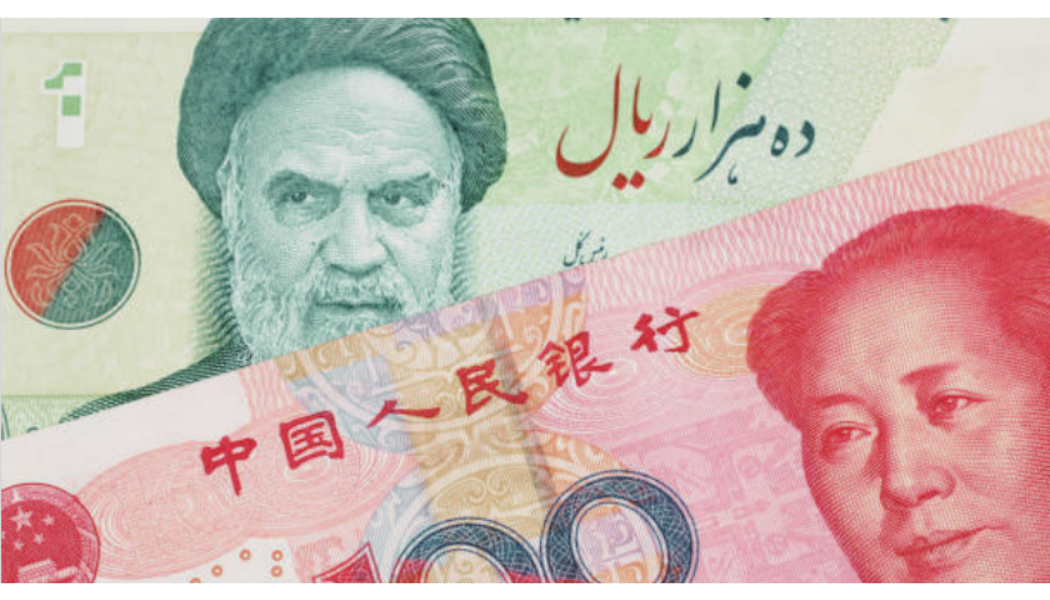
A Middle East War Through Beijing’s Eyes
The war involving the United States, Israel, and Iran is already reshaping the strategic landscape of the Middle East. But it is also raising a larger geopolitical question: how is China interpreting the conflict, and what does Beijing believe it means for the future balance of power?
Recent commentary, including an Economist webinar asking whether China may be “the real winner” from the Iran war, has highlighted the possibility that Beijing could benefit strategically if the conflict deepens U.S. entanglement in the Middle East, strains Western alliances, disrupts global energy markets, and diverts Washington’s attention from the Indo-Pacific. These questions go well beyond the battlefield. They cut to the heart of how China sees competition with the United States in a changing world order.
To help make sense of these issues, the National Security Forum of Nevada welcomes Dr. Xiaoyu Pu, Associate Professor of Political Science at the University of Nevada, Reno. Dr. Pu will examine China’s perspective on the U.S.–Israel war with Iran and place it in the broader context of intensifying U.S.–China competition.
Program Overview
Drawing on his research on Chinese foreign policy and the changing global order, Dr. Pu will explore how Beijing is likely to interpret the war not only as a regional crisis, but as part of a larger strategic contest with the United States.
His recent paper, Bipolarisation and Olympic-Style Competition in US-China Relations, argues that U.S.–China relations are better understood not as a simple “new Cold War,” but as a sustained and multidimensional competition across trade, technology, security, finance, and global institutions. In that framework, crises such as the current war with Iran matter not only for their immediate military consequences, but also for their second- and third-order effects on long-term relative power, alliance politics, and strategic positioning.
The discussion will consider how Chinese leaders and analysts may evaluate the conflict in terms of U.S. overstretch, energy vulnerability, diplomatic legitimacy, and the credibility of American power. It will also examine whether Beijing sees the war primarily as a distraction for Washington, an opportunity for Chinese diplomacy, or a cautionary lesson about escalation and great-power risk.
The program will further explore how events in the Middle East may influence China’s approach to Taiwan, regional order in Asia, and the broader geopolitical balance. As Pu argues in his paper, the most important feature of today’s international system may be an emerging bipolarisation in which the United States and China increasingly dominate the global competitive landscape.
Topics We Will Explore
- How China is likely to interpret the U.S.–Israel war with Iran
- Whether Beijing sees the conflict as a strategic distraction for the United States
- Implications for energy markets, supply chains, and global economic competition
- How the war may influence Chinese diplomacy in the Middle East
- What the conflict may mean for Taiwan and Indo-Pacific strategy
- Whether current events reinforce a more bipolar world centered on Washington and Beijing
- Second- and third-order geopolitical effects of the war
Why Attend?
Strategic Insight: Understand how Beijing may interpret one of the most consequential geopolitical crises of 2026.
Great-Power Perspective: Learn how a Middle East war can shape the broader strategic competition between the United States and China.
Timely Analysis: Explore a question now being debated internationally: could China emerge as a geopolitical beneficiary of this conflict?
Community Conversation: Join Nevada’s national security community—military leaders, industry professionals, academics, and students—for informed discussion of a major global security challenge.
About the Speaker
Xiaoyu “Shawn” Pu is Associate Professor of Political Science at the University of Nevada, Reno. He is the author of Rebranding China: Contested Status Signaling in the Changing Global Order (Stanford University Press, 2019) and has published widely in leading journals, including International Security and International Affairs. He has been a Fellow with the Penn Project on the Future of U.S.–China Relations and a Public Intellectuals Program Fellow with the National Committee on U.S.–China Relations. He has also held visiting fellowships at the Australian National University and the S. Rajaratnam School of International Studies at Nanyang Technological University in Singapore. He received his PhD from The Ohio State University and completed postdoctoral training at Princeton University.
The National Security Forum is a non-partisan, educational, nonprofit organization dedicated to fostering civil discourse and informed discussion about timely and important national security topics. We bring expert speakers from around the U.S. to talk about national and international security, domestic and foreign terrorism, economic and financial threats, the safety of our food and water supply, energy policy, electrical grid stability, and a variety of other topics that affect all Americans. The National Security Forum partners with the Washoe County School District to host an annual Youth Security Forum to encourage future generations of national security leaders.
To support NSF continuing to bring national security programs to our community and our local students, please join NSF as a member or Friend of the Forum at: https://nationalsecurityforum.org/membership/about-our-membership/